The phrase on the hangtag says ocean plastic and the picture on the website shows a boat hauling nets from open water. Neither is what the material in the bag usually is. Commercial feedstock described this way is overwhelmingly collected on land, within a defined distance of a coastline, in regions where waste collection does not reach. That is not a scandal — collecting plastic before it reaches the sea is more effective per dollar than retrieving it afterwards — but it is a material difference between what is claimed and what is delivered, and it is the difference most buyers never examine.
This guide is about the material and its paperwork rather than the story. It covers what the feedstock categories actually are and how they differ in polymer and contamination, why the collection economics produce a price premium and how large it is, the two traceability models and what each can prove, how to read a certificate and a transaction document, what reprocessing does to polymer properties, the specific performance penalties in welded waterproof construction, why almost no film runs at full recycled content, what the premium buys in practice, which claims fail regulatory scrutiny, which tests to run before committing, and how to write a specification you can defend. Production reference for this guide — QUANZHOU JUNYUAN BAGS, custom waterproof bags since 2014, 4,950 m² SGS-verified facility, MOQ 500 pieces per style, sampling in 6–10 working days, bulk in 35–50 days, FOB Xiamen.

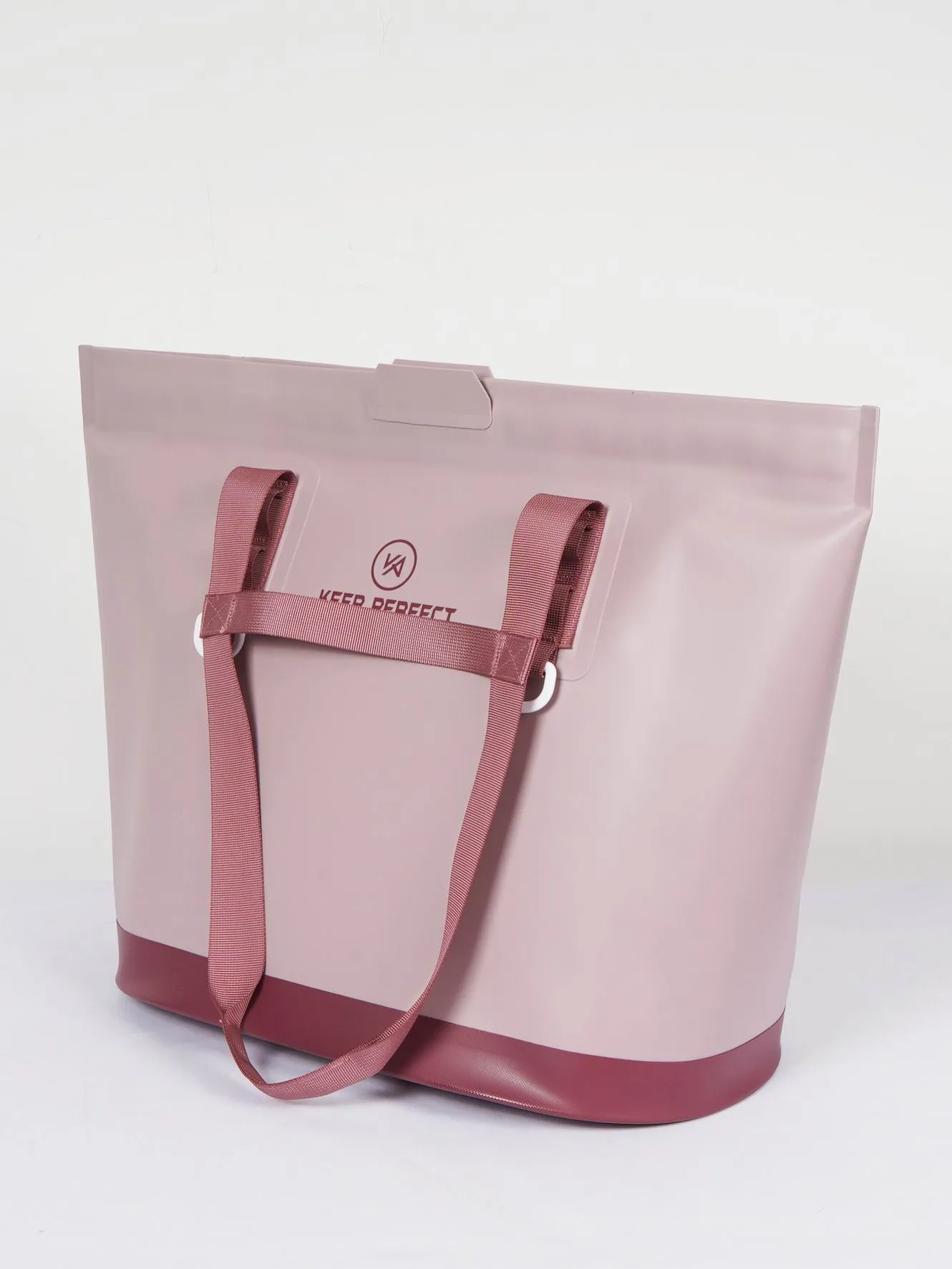
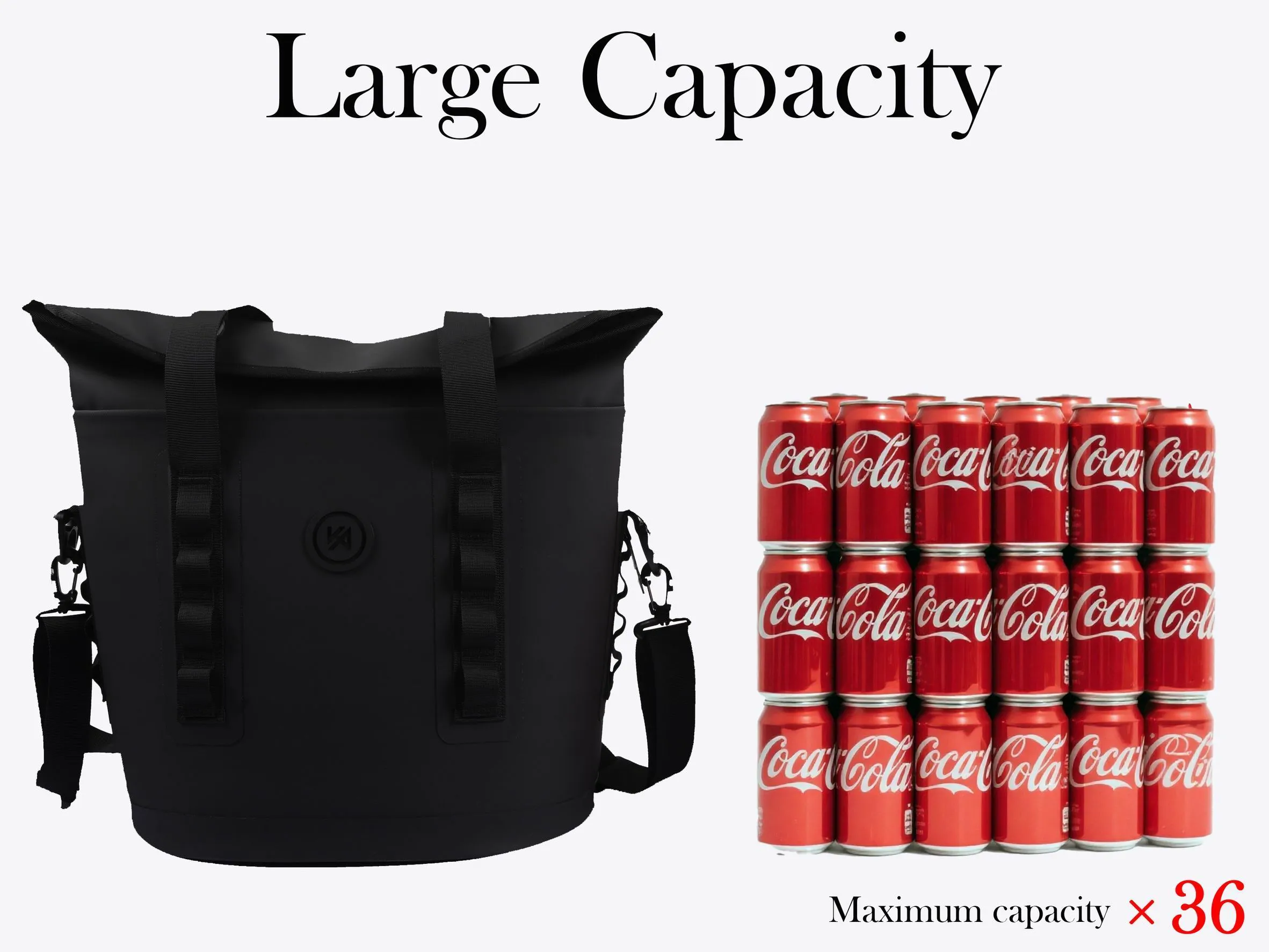
The feedstock was collected on land, and that is the point
The first correction most buyers need is definitional: the term recycled ocean plastic has no standard meaning in any certification scheme, and the industry definition that has the widest currency applies to ocean-bound material: plastic waste collected within roughly 50 kilometres of a coastline in a region lacking formal waste management infrastructure. It is at risk of entering the sea, and intercepting it prevents that. Recovering polymer from the open ocean is a different, vastly more expensive activity conducted in small volumes by specialist operations, and it is not what supplies production orders for waterproof bag materials.
Why the distinction matters commercially: a claim that a product is made from plastic recovered from the ocean is a specific factual statement about the physical origin of the material, and in most cases it is not true of the goods being sold. A claim that a product uses ocean-bound plastic collected in coastal communities is true, defensible and, if anything, more useful — because prevention is cheaper than retrieval. The problem is not that brands use ocean-bound feedstock; it is that many describe it with language that implies retrieval.
There is also a technical reason the land-based feedstock dominates, and it is worth understanding because it shapes everything downstream. Polymer floating in seawater has been exposed to salt, ultraviolet radiation and biological growth for months or years. It is degraded, contaminated and inconsistent, and the cleaning burden makes it poor input for a process that needs to produce film with predictable melt behaviour. Material collected before it enters the water has had far less exposure, which is why it can actually be made into a welded shell.
The practical guidance is simple: use the correct term, define it in your own copy, and be ready to show the collection geography. A buyer who does that has nothing to fear from a regulator, and one who does not is carrying a risk that has already materialised for several well-known brands.
What the material actually is: four distinct feedstocks
Treating all recycled marine-adjacent feedstock as one thing causes most of the confusion in specification and pricing, because the four categories differ in polymer, contamination, price and achievable content. Writing down which one is being offered is the first useful question to ask a supplier.
| Feedstock category | Dominant polymer | Contamination profile | Supply character |
|---|---|---|---|
| Ocean-bound bottles and rigid packaging | PET | Relatively low; sand, labels, some organic residue | Highest volume, most consistent, closest to standard recycled PET |
| Coastal flexible packaging collection | Mixed polyolefin | High; multilayer films, salt, food residue | Difficult to convert; rarely suitable for film or coating |
| Retired fishing nets and rope | Polyamide 6, some polyolefin | Moderate; salt, sand, biological growth | Higher quality polymer, lower volume, premium pricing |
| Open-water recovery | Mixed, heavily degraded | Very high | Very small volumes; used in storytelling and limited editions rather than production |
For waterproof bag construction, only the first and third categories are realistically usable, and they behave differently in the product. Recycled PET from bottles is the workhorse: it spins into fibre, extrudes into film and laminates predictably, and its supply chain is mature enough to carry certification. Recovered nylon from fishing nets is a genuinely attractive material with good mechanical properties, but it is expensive and variable, and its volume is small enough that a production order can exhaust the available allocation.
The second category deserves a warning. Flexible packaging collected from coastal areas is mostly multilayer film that no mechanical process can separate into a single polymer of usable quality. It appears in supply conversations because it is abundant, and it fails in the product because it gels, smells and varies between batches. Any offer of very low-cost marine-adjacent recycled polyolefin should be treated with suspicion until a test report exists.
Why the premium exists: collection economics
Recycled content from coastal collection costs more than recycled content from a municipal bottle stream, and the premium is not a marketing margin. It comes from the structure of the collection system, and understanding it helps a buyer judge whether a quoted premium is proportionate.
- Collection is manual and dispersed: material is gathered by individuals and small enterprises across a wide area, then aggregated through several intermediaries before it reaches a washing facility.
- Collectors are paid above the prevailing local scrap rate, commonly a multiple of it, because the alternative economic activity is better paid. Without that premium the material does not get collected at all.
- Logistics are inefficient: low bulk density means transport cost per kilogram of polymer is high, and aggregation points are remote from processing plants.
- Yield is lower: washing and sorting losses run higher than for bottle flake, and heavily degraded material is rejected outright, so the cost of the input includes the cost of the rejects.
- Certification adds cost: chain of custody documentation, audits and transaction certificates are paid for per shipment and are not optional if the claim is to be made.
The observable result is a material premium of roughly twenty to sixty per cent over standard recycled PET, depending on the category and the year, which translates into a much smaller increase at product level because material is only part of the unit cost. In practice a finished bag using certified ocean-bound content typically costs a few per cent more than the same bag in standard recycled polyester, and more than that if the recycled component is film rather than fabric.
The buyer-relevant insight is that the premium buys a supply chain intervention, not a material improvement. The polymer is not better; if anything it is slightly worse, for reasons described below. A brand paying the premium is funding collection in a place where it would not otherwise happen, which is a legitimate thing to buy and should be described as that rather than as a performance attribute.
Traceability: two models and how much each proves
A content claim is only as strong as the system behind it, and there are two fundamentally different systems in use. They are frequently conflated in supplier communication, and the difference determines whether a claim can be substantiated if challenged.
| Model | How it works | What it proves | What it does not prove |
|---|---|---|---|
| Physical segregation | Recycled and virgin material are kept separate through every process step | The specific unit contains the stated recycled polymer | Nothing else; it is expensive and constrains scheduling |
| Mass balance | Recycled and virgin input are processed together and the recycled fraction is allocated to specific outputs on paper | That an equivalent quantity of recycled input entered the system | That any particular unit contains any recycled molecule |
| Book and claim | The environmental attribute is traded separately from the physical material | That a credit was purchased and retired | Anything about the physical product |
Mass balance deserves a fair hearing rather than dismissal. It is how chemical recycling is accounted, it allows recycled content to be introduced without rebuilding every production line, and it is accepted by the major certification schemes provided the allocation rules are followed and audited. Its weakness is that it is a paper allocation, which means a claim built on it must not be phrased in a way that implies physical segregation.
The wording discipline that follows from this is worth internalising. "Made with recycled content verified through a mass balance chain of custody" is accurate. "This bag is made from recovered ocean plastic" implies something the paperwork may not support. Regulators in several jurisdictions have taken action on exactly this pattern, and the guidance published by the US Federal Trade Commission on environmental marketing claims is representative: claims must be substantiated, must not be overstated, and qualifications must be clear and prominent.
Certificates: what to ask for and how to read them
For a recycled content claim in textile products, the scheme most buyers encounter is the Global Recycled Standard, administered by Textile Exchange, which publishes the standard documents and the list of certified entities. Knowing what the documents look like turns a compliance conversation from an assertion into a check, and it takes about ten minutes.
- Scope certificate: issued to a specific company for a specific site and specific product categories, valid for one year. Check the legal entity name against the supplier on your invoice, not against the trading name in an email signature.
- Transaction certificate: issued per shipment, stating the product, quantity, recycled content percentage and the scope certificate it derives from. Request it for the specific lot used in your order.
- Content thresholds: the standard sets a minimum recycled content for a claim and a higher threshold before a logo may be used. Ask which threshold your product meets rather than assuming.
- Dates: the transaction certificate must cover the production period of your goods. A certificate from the previous year does not cover this year’s order, and this is the most common gap found in audits.
- Chain: every entity that takes ownership of the material needs its own certification. A certified fabric mill supplied by an uncertified polymer producer breaks the chain at the first link.
The full mechanics are set out in our guide to GRS certification for recycled bags; the point to carry from here is that one certificate in a PDF is not evidence of a chain. What constitutes evidence is an unbroken sequence of transaction certificates from the collector or reprocessor through to the finished goods supplier, with matching quantities. Gaps in the sequence are normal and are the reason claims get withdrawn.
There is one more check that experienced buyers perform and inexperienced ones skip: arithmetic on quantities. If a supplier sold certified recycled fabric to six brands this quarter, the total on the transaction certificates should not exceed their certified input. This is not accusatory; it is the same reconciliation any auditor performs, and a supplier with a functioning system can demonstrate it quickly.
What reprocessing does to the polymer
Every melting and re-extrusion step shortens polymer chains, and every washing step removes some of what was added. The result is a material that is functionally similar to virgin polymer and measurably different in ways that matter at the margin, particularly in a welded construction where the margin is thin.
- Molecular weight: intrinsic viscosity falls with each processing pass and with any hydrolytic exposure during use, so melt strength and final tensile properties decline. Typical losses in fibre tenacity are in the single-digit to low-double-digit percentage range.
- Gel particles: crosslinked or degraded fragments that do not melt, appearing as hard specks in film. In a thin waterproof film they are a defect and a potential leak path.
- Contamination residues: salt is corrosive to equipment and accelerates degradation; residual organics cause odour that becomes noticeable in a sealed bag left in the sun.
- Colour: recycled feedstock carries a grey or yellow cast that limits the achievable shade range. Bright, clean colours and true whites are the hardest to produce.
- Batch variability: input composition changes between lots, so melt behaviour, colour and mechanical properties vary more than virgin material. This is the property that most affects production yield.
The production consequence is specific to welded goods. Welding depends on a narrow window of melt viscosity and thermal behaviour; a batch that melts slightly differently produces a seam that looks fine and tests lower. That is why the failure mode associated with high recycled content in this product is not visible defect but reduced consistency, and why process control matters more with recycled feedstock than without it. The statistical discipline described in our article on process control in waterproof bag manufacturing is what catches it.
Filtration is the main mitigation and it is not free. Finer melt filtration removes gel particles but increases pressure, reduces throughput and generates waste, so material sold at a higher recycled content with no price adjustment usually has thinner filtration. Asking a material supplier what filtration specification they run is a surprisingly revealing question.
Performance penalties, and which ones matter
A buyer needs to know which properties move and by how much, because the answer determines whether recycled content is viable for a given construction. The honest summary is that most properties are adequate at moderate content and degrade at high content, and the ones that degrade first are the ones waterproof construction depends on.
- Tensile and tear strength: generally within a few per cent at moderate content, with a wider spread at high content. Compensate with grammage rather than accepting the loss, and verify with the test methods described in our guide to tear, tensile and burst testing.
- Weld strength: the most sensitive property, because it depends on melt behaviour rather than bulk strength. Test peel strength on actual welded samples, not on the base fabric.
- Hydrostatic resistance: usually unaffected where the barrier is a continuous film, but gel particles and pinholes in thin recycled film reduce margin. Film is where recycled content is riskiest.
- Abrasion resistance: broadly comparable in fibre form; the risk is surface fuzzing and pilling from shorter fibres, which matters for packs dragged over rock.
- Ultraviolet stability: reprocessed polymer has already consumed some of its stabiliser package. Where the product lives outdoors, verify weathering performance rather than assuming equivalence, as discussed in our article on UV resistance for outdoor bags.
- Colour fastness: acceptable but with a narrower achievable colour range, and metallised or very pale shades are the practical casualty.
The pattern across these is that fabric tolerates recycled content better than film does, which is the opposite of what most briefs assume. Brands ask for recycled content in the "fabric" without distinguishing the coating or laminate from the substrate, and the substrate is the easier half. Where a welded construction needs a film layer, that layer is where the content usually has to be lower.
Blend ratios: why almost nothing runs at full content
The number that decides the outcome is the blend ratio, and it is the number most often left out of a brief. Suppliers quote recycled content in the fabric; the finished product may include film, coating, adhesive, hardware, webbing, foam and packaging, most of which carry no recycled content at all. A bag described as made from recycled ocean plastic frequently contains recycled polymer in one component.
| Blend ratio in the polymer | Feasibility in fabric | Feasibility in film or coating | What to expect |
|---|---|---|---|
| Up to 30% | Routine | Routine with filtration | Minimal performance change; the safe default |
| 30–60% | Routine with testing | Workable with good feedstock | Slight strength and colour shift; validate welds |
| 60–90% | Feasible for some constructions | Difficult; gel and consistency risk | Higher variability, narrower colour range |
| Near 100% | Possible in fibre, limited supply | Rare in production | Premium price and restricted colour options |
Two further adjustments matter when interpreting any content figure. First, the denominator: state whether the percentage is of the fabric, of the shell, or of total product mass including hardware and packaging. The same material produces figures differing by a factor of two depending on the choice, and the higher figure is the one that reaches the hangtag. Second, the split between post-consumer and post-industrial: post-industrial reprocessed waste is legitimate but is not the same claim, and the two should not be blended in a single percentage without saying so.
The engineering recommendation for welded product is to specify recycled content in the woven substrate and to accept a lower figure or a virgin polymer in the film layer, then to state the overall content honestly. This delivers most of the available environmental benefit, keeps the weld window wide, and produces a claim that survives testing. Attempting the highest possible number everywhere is what leads to seam failures discovered in the field.
The premium, and what it actually buys
Pricing for certified marine-adjacent content varies with feedstock category, oil price and certification cost, so the useful thing to explain is the structure rather than a figure. Material carries a premium of roughly twenty to sixty per cent over standard recycled polyester; converting that to product level gives a smaller increase because material is a fraction of unit cost; and the increase is larger where the recycled component is film rather than fabric.
Two cost effects catch buyers by surprise. Minimum quantities: recycled film and certified fabric frequently carry higher minimum order quantities at the material supplier than their virgin equivalents, which interacts with production planning and can push a first order larger than intended. Our guide to minimum order quantities for custom waterproof bags explains where those constraints come from. Lead time: certified material with transaction documentation cannot always be substituted quickly, so a late specification change can add weeks.
What the premium buys, stated plainly, is a verified supply chain intervention in a coastal collection area, a documented chain of custody, and a claim that can be substantiated. It does not buy a stronger, lighter or more durable bag. Framing the purchase that way internally prevents the disappointment that follows when a team expects environmental and performance benefits from the same line item and only receives the first.
Greenwashing risk: the claims that fail
The regulatory direction on environmental claims is consistent across major markets: claims must be specific, substantiated, and not misleading by omission. Most failures in this product category fall into a small number of patterns, and all of them are avoidable.
- Implying open-ocean recovery when the material is ocean-bound and land-collected. Fix by naming the category and the collection region.
- Quoting the fabric content as the product content. Fix by stating the denominator explicitly.
- Presenting a mass balance allocation as physical segregation. Fix by naming the chain of custody model.
- Combining post-consumer and post-industrial content into one unqualified figure. Fix by splitting them.
- Using a certificate from a previous period to support a current claim. Fix by matching transaction certificates to production dates.
- Presenting a collection programme as a material attribute, implying the bag itself performs better. It does not, and saying so is not required, implying it is a problem.
- No substantiation available on request. If the documentation cannot be produced within a few days, the claim should not be published.
The standard that applies in practice is not perfection but substantiation. A brand that says "this shell fabric contains fifty per cent certified ocean-bound recycled polyester, verified by transaction certificate, balance virgin" is almost never challenged, because every element is checkable. A brand that says "made from ocean plastic" with no qualifier is making an unqualified factual claim about physical origin that its own paperwork may contradict.
One additional risk is worth naming: the claim travels further than the documentation. Retailers, marketplaces and distributors increasingly require evidence before accepting sustainability copy, and a claim that passes on a brand’s own website may be rejected at a retail partner’s onboarding stage. Producing the document set once, at specification time, is cheaper than reconstructing it under a listing deadline.
What to test before committing to a production order
Recycled feedstock is more variable than virgin, which means the evaluation should be built around consistency rather than a single pass result. The test set below is what a technical team should request before a production order, and it is deliberately weighted toward the properties that welded construction depends on.
- Weld peel strength on actual production tooling across at least three material lots, not a single sample, and record the spread rather than the average.
- Hydrostatic head on the laminate before and after flexing and after laundering or salt water exposure.
- Tear and tensile strength against the virgin baseline, with the result expressed as a percentage retained.
- Gel particle count or film defect inspection at the thickness actually being used.
- Colour measurement against the reference standard, since shade drift between lots is the most common commercial complaint.
- Odour assessment after sealed storage at elevated temperature, which is where degraded organic residue becomes apparent.
- Ultraviolet exposure testing where the product is intended for prolonged outdoor use.
- Restricted substance screening, because recycled feedstock has an unknown history and input control is weaker upstream.
The last item is the one most often omitted and the one with the largest downside. Recycled input comes from sources with no controlled formulation history, so screening for restricted substances and for substances of concern is not optional in a product sold into regulated markets. Our guides to REACH and CPSIA testing and OEKO-TEX Standard 100 describe what the screening should cover, and independent verification is covered in our article on third-party testing laboratories.
One process discipline completes the picture: run the same tests on the virgin equivalent and keep both sets. Without a baseline, a recycled result cannot be interpreted, and the question "how much did we give up" is the one that actually determines whether the specification is acceptable.
Writing a specification you can defend
The difference between a defensible programme and an exposed one is usually a paragraph in the technical pack. The following clauses cost nothing to add and convert an aspiration into something a supplier can quote against and an auditor can check.
- Name the feedstock category explicitly: ocean-bound, coastal collection, or recovered net, with the collection region stated.
- Name the polymer and the component it sits in: substrate, film, coating, webbing or hardware.
- State the content percentage and its denominator: of the fabric, of the shell, or of total product mass.
- State the chain of custody model: physical segregation or mass balance, with the certification scheme named.
- Require transaction certificates for the specific production lot, delivered with the shipment rather than on request.
- Split post-consumer from post-industrial content rather than combining them.
- Set acceptance criteria in measurable terms: minimum weld peel strength, minimum hydrostatic head, maximum colour deviation.
- Require lot traceability: which material lot went into which production batch, recorded and retrievable.
- State the claim wording in the specification, so that marketing and procurement are working from the same sentence.
That last clause is the one that prevents most problems, because the failure mode in this area is almost never a laboratory result. It is a marketing team writing a sentence that procurement cannot support, on a deadline, with the certificate set in a different country. Putting the approved wording in the technical pack means the sentence that goes on the hangtag has been checked against the paperwork before anyone is under pressure.
It also changes the supplier conversation usefully. A supplier asked to quote "recycled ocean plastic" will quote something. A supplier asked to quote ocean-bound recycled polyester at fifty per cent of shell mass, mass balance certified, with transaction certificates and a stated weld strength acceptance criterion, will quote a specific material at a specific price, and the difference in those two quotations is the difference between a story and a programme.
Making the claim honestly, and why it sells better
There is a commercial argument for all of this discipline that has nothing to do with compliance. Consumers in this category are unusually sceptical, because outdoor and travel buyers have been over-claimed at for a decade and many can name a brand that was caught. Specificity is the thing that reads as credible: a stated percentage, a named denominator, a named certification and an honest statement of what was not achieved.
It is also the position that survives the next regulatory tightening, which is coming in most major markets. Programmes that were built on unqualified language will have to be rewritten, and rewriting a claim that has been on packaging for two seasons is far more expensive than writing it correctly once. Programmes built on substantiated specifics do not need to change.
The honest summary of this material, stated plainly, is worth putting in your own copy: ocean-bound recycled polymer is a real and useful intervention, it funds collection where collection would not otherwise happen, it costs more and performs slightly worse, it is not recovered from the open sea, and it is verifiable if you ask for the paperwork. Every element of that sentence is defensible, and a buyer who can say all of it has a stronger position than one who can only say the first half.
If you want to work through the specification for a particular style, the fastest route is a technical pack with the component list and the claim you intend to make. Send the specification with the target content and we will tell you which components can carry it and what the weld testing would need to show. Minimum order quantity is 500 pieces per style, samples in 6–10 working days, bulk production in 35–50 days, quoted FOB Xiamen.
Frequently Asked Questions
Q1. Is plastic in these bags actually recovered from the ocean?
Usually not. Commercial supply is overwhelmingly ocean-bound material: waste collected on land within roughly 50 km of a coastline in areas without formal collection. Open-water recovery exists in tiny volumes and does not supply production orders.
Q2. What is the difference between ocean-bound and ocean-harvested plastic?
Ocean-bound is intercepted before it enters the sea; ocean-harvested is retrieved from water after floating and degrading. The second is far more expensive, far lower volume and generally too degraded for welded film production.
Q3. Why does ocean-bound feedstock cost more than standard recycled polyester?
Because collection is manual and dispersed, collectors are paid above local scrap rates, aggregation logistics are inefficient, washing yield is lower, and certification is charged per shipment. The premium funds collection rather than improving the polymer.
Q4. What is mass balance?
A chain of custody model where recycled and virgin input are processed together and the recycled fraction is allocated to outputs on paper. It is accepted by major schemes but must not be described in language implying physical segregation.
Q5. What documents prove a recycled content claim?
A current scope certificate for each company in the chain, plus transaction certificates covering the specific production lot, with quantities and dates that match your order. One certificate alone does not evidence a chain.
Q6. What recycled content percentage can I realistically specify?
Up to 30% is routine in both fabric and film; 30 to 60% is workable with testing; above that, film becomes difficult. Specify recycled content in the substrate and accept a lower figure in the film layer.
Q7. Does recycled content weaken a welded seam?
It can. Welding depends on melt behaviour, which varies more with reprocessed feedstock, so weld peel strength is the most sensitive property. Test actual welded samples across several material lots and record the spread.
Q8. Why is the film riskier than the fabric?
Film is thin, so gel particles and pinholes are defects rather than cosmetic issues, and the melt behaviour directly determines weld quality. Fabric tolerates reprocessed polymer considerably better than film does.
Q9. Will the colour match my brand standard?
Recycled feedstock carries a grey or yellow cast, so bright, clean and very pale shades are hardest. Expect a narrower achievable range and set a numerical colour tolerance rather than relying on a visual reference.
Q10. How much does the recycled version cost?
Material typically carries a premium of roughly twenty to sixty per cent over standard recycled polyester, translating to a few per cent at product level, more if the recycled component is film rather than fabric.
Q11. Are there supply constraints I should plan for?
Yes. Certified film and fabric often carry higher minimum quantities than virgin equivalents, and certified material cannot always be substituted quickly, so late specification changes can add weeks.
Q12. What is the biggest compliance risk with these claims?
Unqualified language implying open-ocean recovery, quoting fabric content as product content, presenting mass balance as segregation, and using certificates dated outside the production period. All four are avoidable with precise wording.
Q13. Should recycled material be screened for restricted substances?
Yes, without exception. Recycled feedstock has an uncontrolled input history, so screening is required for any product sold into regulated markets, independent of the recycled content claim itself.
Q14. How do I compare recycled against virgin material fairly?
Run identical tests on both and express recycled results as a percentage retained. Without a virgin baseline from the same laboratory at the same time, a recycled result cannot be interpreted.
Q15. Can I use a hangtag with a certification logo?
Only if the product meets the scheme’s threshold for logo use and the supplier is certified for that product category. Ask which threshold your product meets rather than assuming the logo is available.
Q16. Is post-industrial recycled content the same as post-consumer?
No. Post-industrial material is reprocessed manufacturing waste, which is legitimate but a different and weaker claim. Do not combine the two into one unqualified percentage.
Q17. What is the single most useful thing to put in a technical pack?
The approved claim wording, alongside the content percentage, its denominator, the chain of custody model and the required transaction certificates. That aligns marketing and procurement before anyone faces a deadline.
People Also Ask
What does ocean-bound plastic mean?
Plastic waste collected on land, typically within about 50 km of a coastline in areas without formal waste collection, so that it is intercepted before reaching the sea.
Is recycled ocean plastic really from the ocean?
Rarely. Commercial supply is land-collected ocean-bound material; retrieving degraded plastic from open water is done in very small volumes and does not supply production orders.
What is mass balance certification?
A chain of custody model where recycled and virgin input are processed together and the recycled share is allocated to outputs on paper rather than physically separated.
How much recycled content can a welded bag use?
Up to about 30% is routine in both fabric and film, 30 to 60% needs weld validation, and film above that becomes difficult because of gel particles and melt variability.
Does recycled polymer perform as well as virgin?
Close but not identical. Tensile and tear are usually within a few per cent at moderate content, while weld consistency and colour range are the properties that degrade first.
How can you tell if an ocean plastic claim is genuine?
Ask for transaction certificates covering the production lot, check dates and quantities, and confirm whether the claim is ocean-bound or open-water and whether it is segregated or mass balance.