bluesign certification is the deepest chemistry credential a waterproof material can carry: bluesign — the Swiss input-stream management system that audits the chemicals, dyes and processes going into a textile before production, rather than testing the finished fabric afterward — matters for waterproof bags more than for almost any other product category, because waterproof construction is chemistry-intensive construction: PU and silicone coatings, DWR finishes, laminated films, solvent carriers, pigments and adhesives all enter the product as chemistry, and the traditional answer — test the finished fabric for restricted substances — finds problems only after they are baked into ten thousand meters of coated cloth. bluesign inverts the sequence: approved chemistry in, managed process through, clean product out — which is why the outdoor industry, whose customers read ingredient lists and whose regulators tighten PFAS and solvent rules yearly, adopted it as the de facto sourcing standard, and why brands from Patagonia-tier to high-street now ask their bag suppliers the same question. This guide reads bluesign from the bag buyer’s chair: what the system actually certifies and how the input-stream logic works, where it sits against OEKO-TEX and the other labels buyers confuse it with, what it means for waterproof coatings and films specifically, the honest economics of cost and access, and the verification lines that make a bluesign claim auditable on a purchase order.
The manufacturer reference is QUANZHOU JUNYUAN BAGS: custom waterproof bag production since 2014, 4,950 m² SGS-verified facility, 7 lines, 149 machines, 137 staff, 200,000 pieces monthly. MOQ 500 per design, samples 6–10 working days, bulk 35–50 days, AQL 2.5 inspection, 30/70 T/T, FOB Xiamen, shipping to 100+ countries.
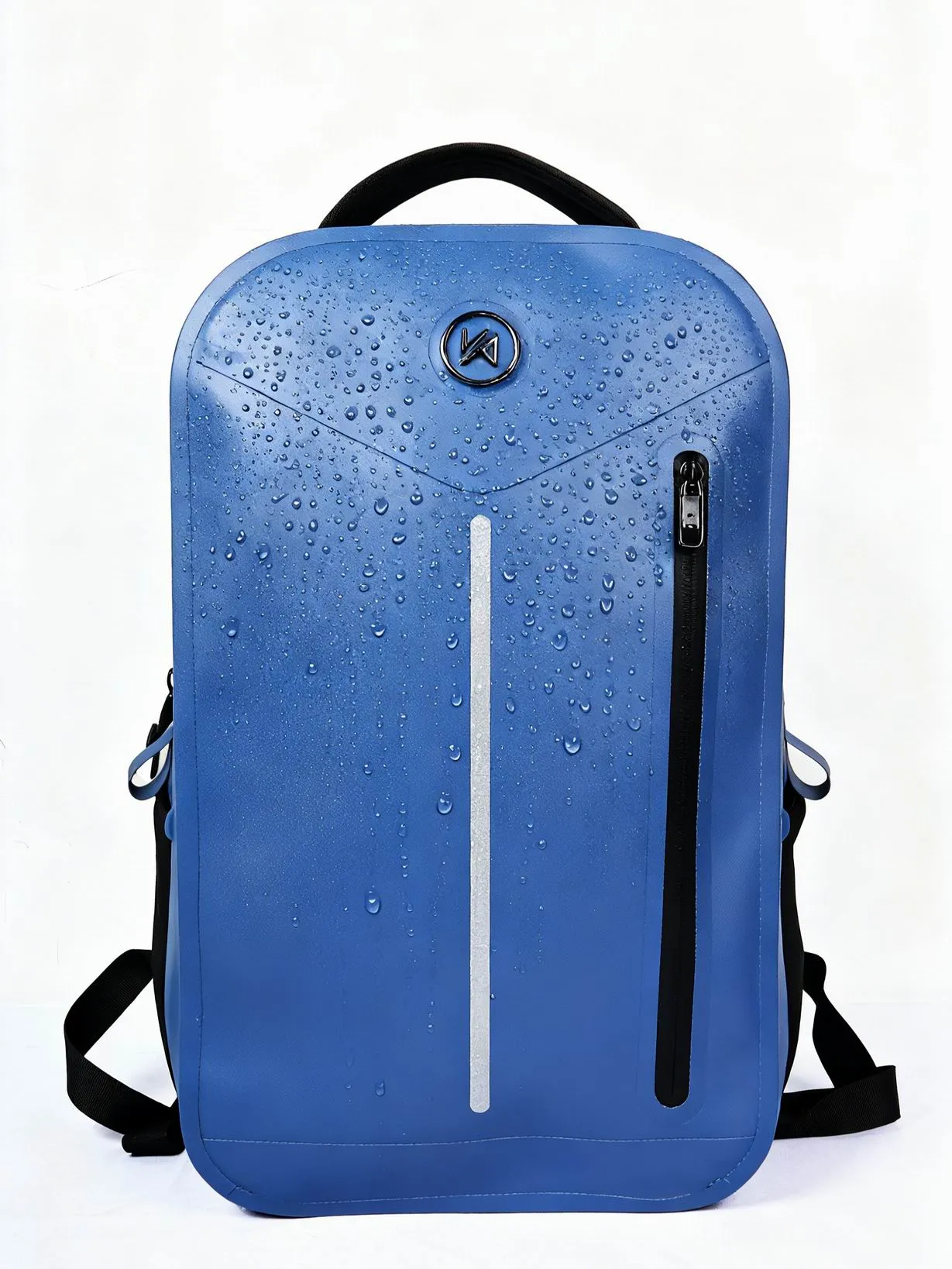
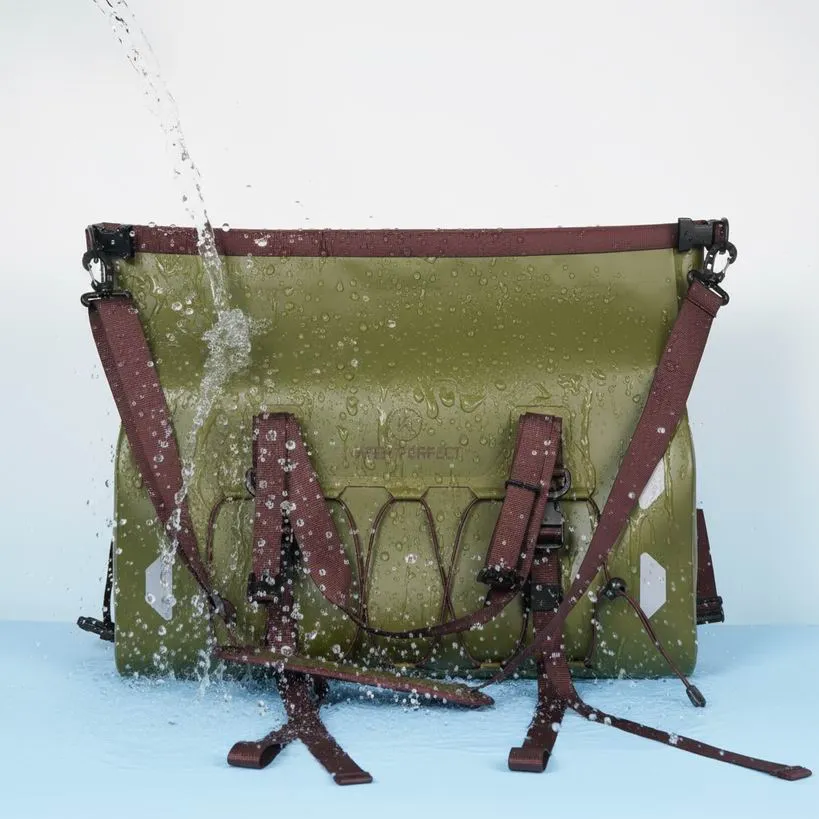
Input-stream logic: why bluesign audits the beginning, not the end
The traditional chemical-compliance model is output testing: make the fabric, then screen it against the restricted-substance list — REACH SVHC, the brand’s own RSL — and reject what fails. It works as a legal floor, and it fails as a management system for three reasons: the test finds chemistry after it is in the product, when the only fixes are scrap or argument; the test covers the substances someone thought to list, while chemistry evolves faster than lists — the regrettable-substitution cycle where a banned solvent is replaced by an unlisted cousin with the same hazards; and the output test says nothing about the factory’s own emissions and worker exposure, which the sustainability conversation increasingly prices. bluesign’s input-stream principle inverts all three: the chemical products allowed into the process are audited first — dyes, auxiliaries, coatings, solvents — against the bluesign criteria, so hazardous chemistry never enters the building; the process itself is audited — emissions, water, energy, worker protection — so the chemistry that does enter is handled under control; and the output inherits a managed chain rather than a lucky one, with the bluesign APPROVED label on materials and the bluesign PRODUCT label on finished consumer goods built from approved components. The waterproof-specific weight: coated and laminated materials carry more chemistry per square meter than almost any apparel fabric — the coating system, its solvents or water carriers, the DWR top finish, the lamination adhesive — so the input-stream audit covers a genuinely larger risk surface, and the brands that specify bluesign for shells increasingly specify it for the waterproof layers beneath, the coating chemistry our coatings guide maps family by family.
How the system works: from chemical audit to fabric label
The bluesign machinery runs as a partnership chain, and each link is auditable. Chemical suppliers: the manufacturers of dyes, coatings and auxiliaries submit their products — full composition, hazard data, production process — to bluesign’s assessment; approved products enter the bluesign FINDER database, the positive list that mills buy from, which is the input gate made concrete. Textile mills: a fabric or coating mill becomes a bluesign SYSTEM PARTNER by passing an on-site assessment of its chemistry management, process controls, emissions, water and energy, and worker safety — with a corrective plan and re-assessment cycle, so partnership is a maintained state, not a one-time award. The approved material: fabric produced by a system partner from bluesign-approved chemistry, within the partner’s process controls, earns the bluesign APPROVED label at the material level — the label a bag factory buys when it sources certified fabric. The finished product: a consumer product built from a high threshold of bluesign-approved components — the assembly rule covering shell, lining and the major chemistry carriers — earns bluesign PRODUCT, the label the end customer sees. The traceability spine: approved chemistry, partner mills and approved materials register in bluesign’s databases, and the transaction certificates follow the material through the chain — the documentary discipline our third-party labs guide prices for every certification frame. The buyer’s summary: bluesign is not a test the fabric passed — it is a supply chain the fabric came through, and the claim is only as strong as the chain documentation behind it, which is why the verification lines at the end of this guide read the databases, not the hangtag.
bluesign versus OEKO-TEX and the label crowd
Buyers meet bluesign inside a crowd of textile labels, and the distinctions decide which one a program actually needs. OEKO-TEX Standard 100: the output test par excellence — the finished fabric is screened against a restricted-substance list and certified clean at the product level; it answers "is this fabric safe to wear" — a consumer-safety verdict, cheaper and broader than bluesign, and complementary rather than competing: many certified materials carry both, bluesign auditing the process and OEKO-TEX confirming the output. GRS and the recycled-content family: chain-of-custody certification for recycled claims — answering "is the recycled content real and traced" — a different question entirely, which our GRS guide walks separately; a recycled waterproof fabric needs GRS for its content claim and bluesign or OEKO-TEX for its chemistry claim, and buyers who order one expecting the other get neither. Brand RSLs and ZDHC: the brand’s own restricted-substance list and the industry’s manufacturing RSL push chemistry management without a consumer label — the compliance floor bluesign exceeds. The selection logic for bag programs: consumer-facing outdoor and premium brands price bluesign as a shelf-level credential — the hangtag their customers recognize; compliance-driven programs price OEKO-TEX as the output floor; recycled programs add GRS; and the combination — bluesign-approved fabric, GRS-certified content, OEKO-TEX output test — is the full-stack answer for the premium sustainable waterproof build, the eco-material landscape our eco waterproof bags guide maps for the consumer side. The buyer’s one-line audit: each label answers one question — process chemistry, content custody, or output safety — and a purchase order that names the question gets the label that answers it.
Waterproof-specific stakes: coatings, DWR and the PFAS era
Waterproof construction is where bluesign’s chemistry management earns its premium, because the category’s chemistry is under active regulatory and reputational pressure on three fronts. DWR and PFAS: the durable water repellents that bead rain off fabric faces were historically fluorinated chemistry — the PFAS family now restricted across jurisdictions and banned by brand RSLs industry-wide — and the transition to PFC-free DWR is exactly the input-stream problem bluesign manages: approved non-fluorinated repellents qualified before they enter the coating line, the chemistry transition our coatings guide prices for performance trade-offs. Coating and lamination solvents: solvent-borne PU systems carry emissions and worker-exposure loads that water-based alternatives reduce — the process axis bluesign audits on site, and the material transition our water-based versus solvent guide compares environmentally; bluesign partnership pushes the process controls and, increasingly, the water-based migration. PVC and its additives: the phthalate plasticizers and chlorine chemistry that made PVC cheap and flexible are the substances brand RSLs restrict first — which is why bluesign-approved waterproof materials concentrate in the TPU and silicone families, the material fork our TPU versus PVC guide prices on performance, and our PVC-free guide maps for the alternatives. The buyer’s synthesis: bluesign for waterproof builds is not a lifestyle label — it is the management system that keeps the product legal and sellable as the chemistry rules tighten, and the cost arithmetic below shows it priced against the alternative: reformulating under a ban, after the fabric is woven, is the most expensive chemistry lesson in the industry.
Inside the bag program: what certified sourcing changes
For a waterproof bag program, bluesign changes four working habits, and each is a specification detail rather than a philosophy. Material nomination moves upstream: instead of qualifying any fabric the market offers, the program nominates from the approved-material universe first — the FINDER database and the partner-mill network become the sourcing map — which occasionally trades a favorite price-point construction for an approved alternative, a trade the brand signs off at design stage rather than discovering at fabric booking. The BOM becomes a chemistry document: shell, lining, coating system, DWR finish, film and adhesive each carry an approval status, and the program tracks the percentage of certified mass because the finished-goods label thresholds are calculated on component coverage — the arithmetic that decides whether the bluesign PRODUCT label is available or the program stays at material-level sourcing. Sampling inherits the chain: lab dips and strike-offs must come through the approved material route, because a sample approved in uncertified fabric and a bulk run in certified fabric is two different products wearing one approval — the first-article discipline our sampling guide prices for every property applies doubled to certified claims. And the claim discipline extends downstream: marketing language follows the licensed level exactly — "built with bluesign APPROVED materials" for material-level sourcing, the PRODUCT mark only under license — because overstating the chain is the fastest route to losing it, and the databases make overstatement auditable. None of the four habits is expensive; all four are procedural — which is why certified programs run smoothly inside factories that already keep lot-level records, and why the documentation culture our ISO 9001 guide prices is the practical foundation every certification frame builds on.
The honest economics: cost, access and brand value
bluesign pricing has three components, and the honest buyer prices all three. Material premium: bluesign-approved fabrics and coatings carry a per-meter premium — varying by mill and construction, typically a modest percentage over equivalent uncertified material — the direct cost line. Access constraints: the approved-material universe is smaller than the open market — certain constructions, price points and novel materials may not exist in approved form, so the specification must be written against what the FINDER database actually stocks, not against an ideal; the bag factory’s sourcing flexibility narrows to the partner-mill network, which is large in performance textiles and thinner in some bag-specific constructions. Program overhead: the brand-side bluesign partnership and the label licensing carry their own fees where the finished-goods bluesign PRODUCT label is used — versus material-level bluesign APPROVED sourcing, which a bag program can do without brand partnership, printing no consumer label but gaining the chemistry chain. The value side prices three returns: retail and brand access — outdoor and premium accounts that filter suppliers by bluesign; regulatory insurance — the managed chemistry chain as PFAS and solvent rules tighten, the compliance hedge our REACH and CPSIA guide prices from the legal side; and brand equity — the hangtag story that premium eco positioning is built on, the margin logic our eco-guides detail. The buyer’s decision rule: bluesign pays when the target customers filter by it or the chemistry risk justifies the insurance — for a price-point promotional tote, output testing carries the floor; for a premium outdoor program, the input-stream chain is increasingly the ticket to the shelf.
The bluesign verification lines: six checks
The guide compresses to six verification lines. One: the claim level — material-level bluesign APPROVED sourcing versus product-level bluesign PRODUCT labeling, named on the purchase order, because the two carry different chain requirements and different label rights. Two: the material is in the system — the specific fabric verified with the mill’s system-partner status and the material’s approved listing, not the mill’s brochure. Three: the chemistry follows the claim — transaction documentation linking the purchased fabric lot to its approved status, the chain-of-custody discipline every certification frame shares. Four: the waterproof stack is covered — coating, DWR, film and adhesive named in the approved chemistry, because a certified base fabric with an unaudited coating is a partial chain. Five: the output floor still runs — bluesign manages the process; the destination market’s compliance tests still verify the product, per the frame our third-party labs guide prices. Six: the label rights are licensed — the consumer-facing bluesign PRODUCT mark used only under the brand-side license, because label misuse is the fastest way to lose the credential. Six lines turn a bluesign claim from a hangtag into an auditable chain — and the chain that sources and builds against it, 200,000 pieces monthly, samples in 6–10 working days, bulk 35–50 days, FOB Xiamen, is documented end to end for buyers who want the factory side of the certified-material relationship before the first lot.
Frequently Asked Questions
Q1. What is bluesign certification?
A Swiss input-stream management system for textiles: the chemicals, dyes and processes going into a fabric are audited and approved before production, so hazardous chemistry never enters the chain — versus output testing that screens the finished fabric afterward.
Q2. What does bluesign APPROVED mean on a fabric?
The material was produced by a bluesign SYSTEM PARTNER mill from bluesign-approved chemistry within audited process controls — the material-level label a bag factory buys when sourcing certified fabric.
Q3. What is the difference between bluesign and OEKO-TEX?
bluesign audits the input stream and process — chemistry and factory management; OEKO-TEX Standard 100 tests the output — the finished fabric against a restricted-substance list. They answer different questions and many certified materials carry both.
Q4. Is bluesign the same as GRS?
No — GRS certifies recycled content chain-of-custody; bluesign certifies chemistry management. A recycled waterproof fabric needs GRS for its content claim and bluesign or OEKO-TEX for its chemistry claim.
Q5. Why does bluesign matter for waterproof bags specifically?
Waterproof construction is chemistry-intensive: coatings, DWR finishes, films, solvents, adhesives. bluesign manages exactly those inputs — including the PFAS-free DWR transition and the water-based coating migration the regulations are pushing.
Q6. Does bluesign cover PFAS?
Yes — the DWR transition is the flagship case: approved non-fluorinated repellents are qualified at the input stream, replacing the fluorinated chemistry being restricted across jurisdictions and brand RSLs.
Q7. Can a bag use bluesign fabric without the bluesign PRODUCT label?
Yes — material-level sourcing uses bluesign APPROVED fabrics without brand-side partnership or the consumer label. The chemistry chain is gained; the hangtag rights are not. The PRODUCT label requires the brand-side license and component thresholds.
Q8. How much more does bluesign fabric cost?
A modest per-meter premium over equivalent uncertified material, varying by mill and construction — plus access constraints: the approved-material universe is smaller, so specifications are written against what the system actually stocks.
Q9. How do I verify a bluesign claim?
Verify the mill’s system-partner status and the material’s approved listing through bluesign’s databases, and follow the transaction documentation from fabric lot to purchase order — the claim is the chain, not the hangtag.
Q10. Does bluesign replace REACH compliance testing?
No — bluesign manages the process; the destination market’s legal tests still verify the product. Mature programs run both: the managed input chain plus the output compliance floor per market.
Q11. Which brands require bluesign?
The outdoor industry adopted it as the de facto sourcing standard — premium outdoor brands filter material suppliers by it, and the requirement is spreading to bags, packs and accessories as chemistry rules tighten.
Q12. Is bluesign available for all waterproof materials?
Not universally — approved constructions concentrate in performance textiles: PU-coated nylons and polyesters, TPU laminates, silicone systems. Some price-point or novel constructions lack approved versions; specification follows the FINDER database, not the wish list.
Q13. What is a bluesign SYSTEM PARTNER?
A mill or manufacturer that passed bluesign’s on-site assessment — chemistry management, emissions, water, energy, worker safety — and maintains it through corrective plans and re-assessment cycles. Partnership is a maintained state, not an award.
Q14. Does bluesign audit the bag factory too?
The chain audits chemistry suppliers and textile mills; the bag assembler joins the chain when the finished-goods PRODUCT label is sought, with assembly-level requirements. Material-level sourcing needs no assembler certification.
Q15. Why is bluesign called input-stream management?
Because it approves what goes in — chemicals, dyes, auxiliaries — rather than only testing what comes out. Clean inputs plus controlled process make the output inherit a managed chain instead of passing a lucky test.
Q16. Is bluesign worth it for a mid-market bag brand?
Decide by the customer filter and the chemistry risk: premium outdoor and eco-positioned programs gain shelf access and regulatory insurance; price-point promotional builds carry the output-test floor instead. The premium only pays where the market prices it.
Q17. What goes on a bluesign specification?
Six lines: the claim level, the verified approved material, the lot transaction documentation, the full waterproof stack covered, the output compliance tests still running, and the label rights licensed where used.
People Also Ask
What does bluesign approved fabric mean?
Fabric made by a bluesign system-partner mill from bluesign-approved chemistry under audited process controls — an input-stream credential covering what entered the material, not just an output test of what survived.
Is bluesign better than OEKO-TEX?
Different questions: bluesign audits process chemistry and factory management; OEKO-TEX tests the finished fabric for harmful substances. Premium outdoor programs carry both — process credential plus output confirmation.
Does bluesign mean PFAS-free?
Approved DWR chemistry is non-fluorinated under the current criteria, making bluesign materials the managed path through the PFAS transition — but the claim to verify is the specific finish’s approved status, not the logo alone.
How does a factory become bluesign certified?
Mills and manufacturers become system partners through bluesign’s on-site assessment of chemistry management, emissions, water, energy and worker safety, maintained through corrective plans and re-assessment cycles.
Do consumers recognize the bluesign label?
In the outdoor segment, strongly — the hangtag is a shelf-level credential for premium eco positioning. Outside it, recognition is thinner, which is why the label’s value tracks the target customer’s category.
Can recycled fabric also be bluesign approved?
Yes — the claims are complementary: GRS certifies the recycled content chain-of-custody, bluesign approves the chemistry and process. The premium sustainable waterproof build carries both plus an output test.